
Symptoms are signals
Slow sales, missed deadlines, repeated admin work, and long hours show that something is wrong—but not necessarily where the real problem begins.


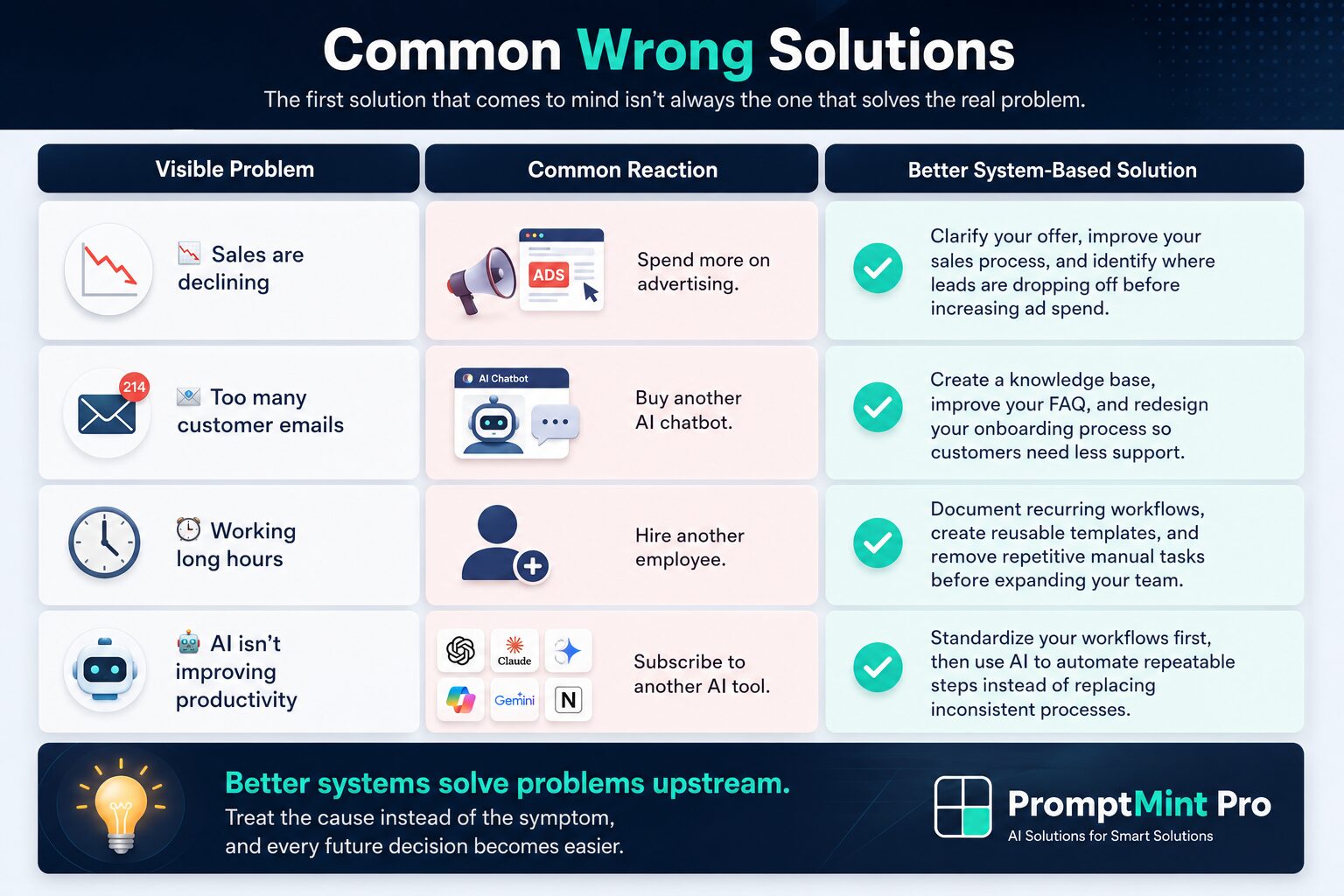
Choosing the wrong solution rarely causes immediate failure. In fact, it often feels like progress. You buy new software, redesign your website, subscribe to another AI tool, or hire extra help. For a short time, it feels like you're taking meaningful action.
The problem is that these decisions can quietly increase complexity without removing the business bottleneck. Instead of fixing the constraint that's slowing everything down, you build more work around it. The original problem remains, while new ones begin to appear.
Imagine a consultant who believes their biggest challenge is generating more leads. They invest heavily in advertising and begin attracting twice as many enquiries. At first glance, the strategy appears successful.
But there's a hidden issue. Their proposal process is slow, inconsistent, and entirely manual. Instead of increasing revenue, the additional enquiries create longer response times, missed follow-ups, and frustrated prospects. The marketing worked exactly as intended. The real bottleneck simply became larger.
Growth does not fix weak systems. It exposes them.
This pattern appears in businesses of every size. More customers overwhelm poor onboarding. More staff expose undocumented processes. More AI tools amplify inconsistent workflows. Growth magnifies whatever already exists, whether that is a strong system or a fragile one.
Before investing in another solution, ask whether you're removing the constraint or simply increasing the pressure around it. Solving the right problem once is almost always less expensive than repeatedly solving the wrong problem.
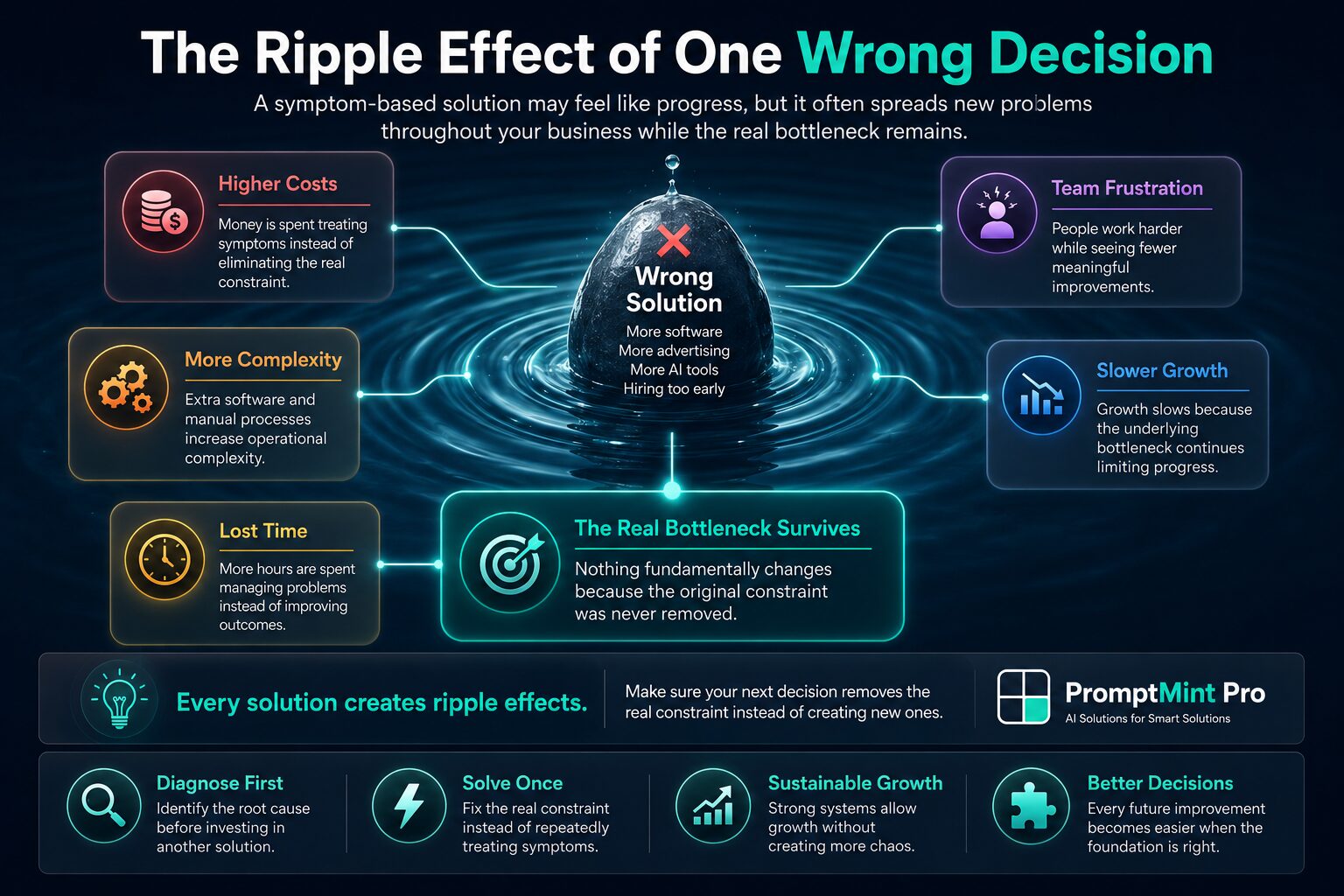
One incorrect decision rarely stays isolated. It usually spreads into cost, time, complexity, and confidence.
Money is spent treating symptoms instead of eliminating the real constraint.
Extra software, approvals, and manual steps increase operational friction.
More hours go into managing problems instead of improving outcomes.
Nothing fundamentally changes because the original constraint was never removed.
Every business has bottlenecks. The difference between businesses that grow and those that struggle is not how many problems they face. It is how quickly they identify and solve the right one.
The fastest way to avoid solving the wrong problem is to slow down long enough to question the first answer. Most visible problems are only signals. They tell you something is wrong, but they do not always tell you where the real constraint is.
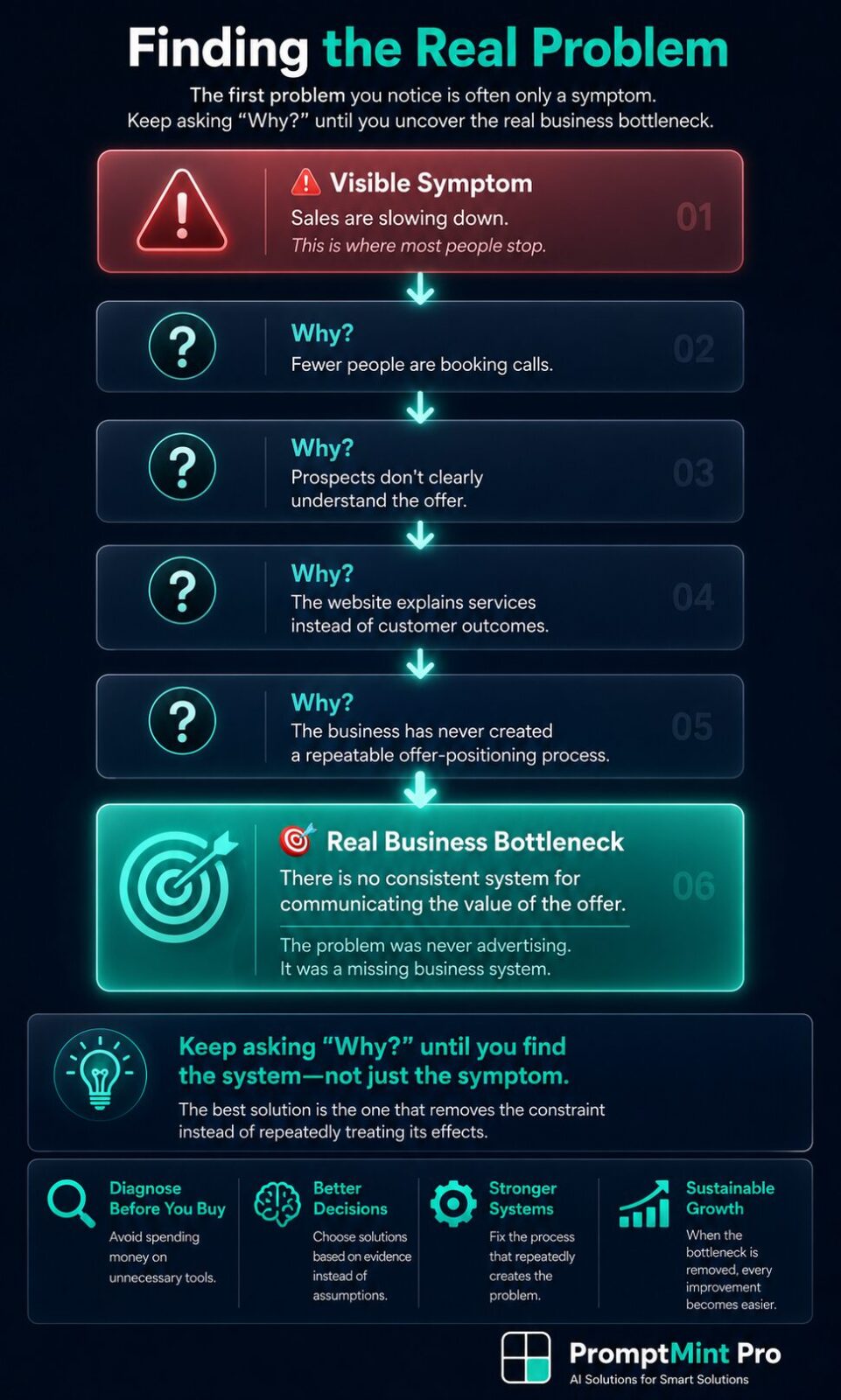
A simple way to investigate business bottlenecks is the Five Whys method. Instead of stopping at the first explanation, you ask “why?” repeatedly until the pattern becomes clearer.
For example, if sales are declining, the real issue may not be advertising. It may be weak follow-up, unclear offers, inconsistent content, or a sales process that depends too much on memory.
Five Whys Example
Why are sales slowing down? Because fewer people are booking calls.
Why are fewer people booking calls? Because fewer leads understand the offer.
Why do they not understand the offer? Because the website explains services, not outcomes.
Why does the website focus on services? Because the business has never clarified its core offer.
Why has the offer never been clarified? Because there is no repeatable offer-positioning process.
Name what is happening without jumping to the solution too quickly.
Each answer should move you closer to the system creating the issue.
The real problem is usually the repeatable point where progress slows down.
Choose the solution that removes the cause, not the one that only hides the symptom.
The goal is not to ask “why” forever. The goal is to ask enough times to stop treating symptoms and start improving the system that creates them.
A weak system creates the same problem repeatedly. You can solve the issue once, but if the workflow that produced it stays unchanged, the problem will eventually return.
This is why better business systems matter. They do not simply help you finish one task. They improve the conditions that create the work in the first place.
Instead of asking, “How do I fix this again?”, the better question is, “What process keeps creating this problem?”
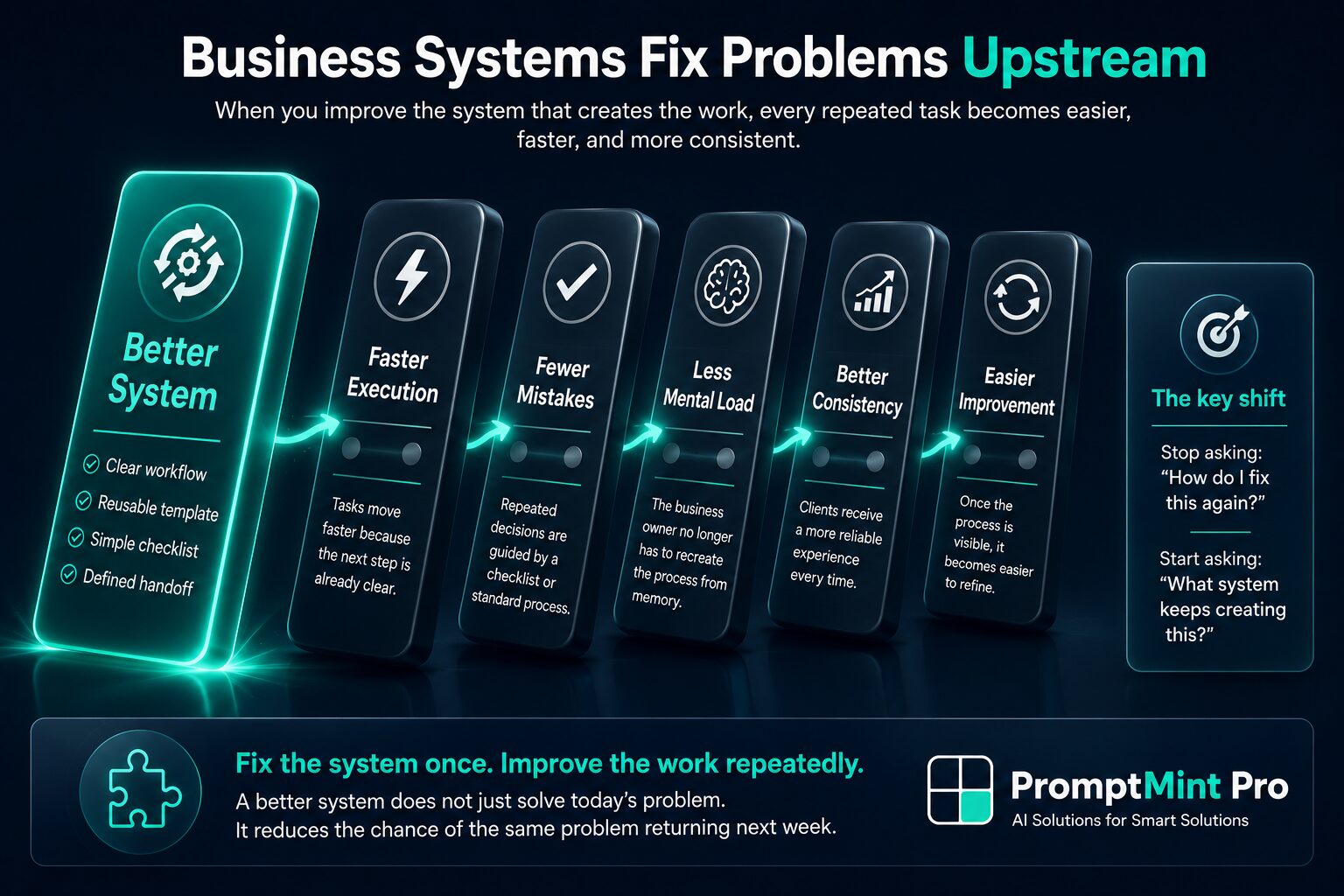
The next step is already clear, so less time is wasted deciding what to do.
Recurring work follows a checklist or template instead of relying on memory.
You stop rebuilding the same process from scratch every time.
Clients receive a more reliable experience because the process is repeatable.
The practical shift
A better system does not just solve today's problem. It reduces the chance of the same problem returning next week. That is how businesses move from constant correction to steady improvement.
Imagine a consultant who believes their sales problem is caused by a lack of leads. They start posting more content, replying to more enquiries, and considering paid ads. From the outside, this looks reasonable.
But the real issue is not lead generation. The real business bottleneck is the proposal process. Every proposal is written from scratch, pricing changes each time, follow-ups are inconsistent, and warm leads go cold before the consultant sends a clear next step.
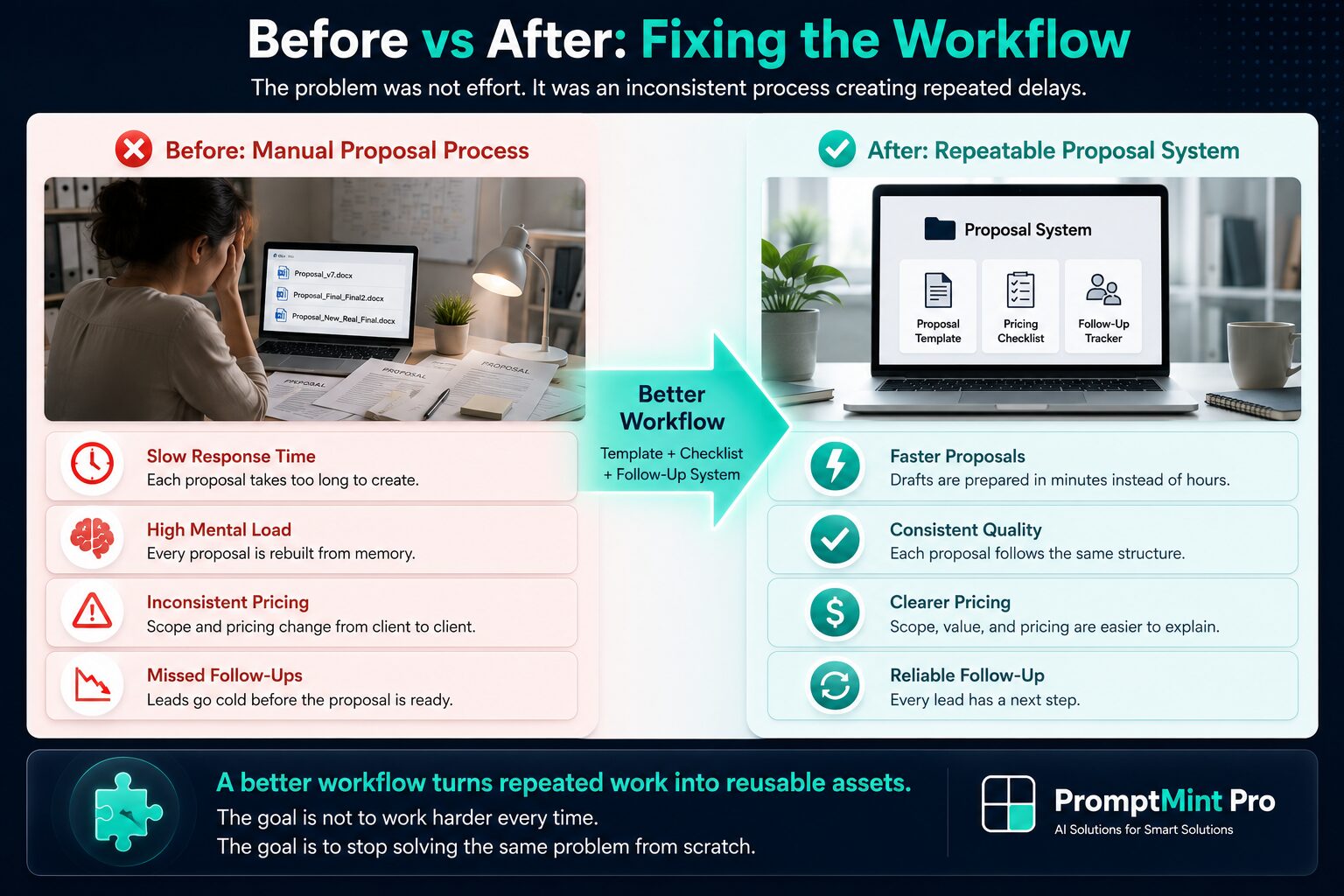
Before
Each enquiry created more manual work. The consultant was not short of opportunity. They were short of a repeatable way to convert that opportunity into a clear proposal and next step.
After
With a proposal template, pricing checklist, and follow-up tracker, every new lead became easier to handle. The work became clearer, faster, and less dependent on memory.
Lesson Learned
More leads only help when the business has a reliable way to handle them. If the handoff from enquiry to proposal is slow or unclear, lead generation simply creates more pressure around the same bottleneck.
Business bottlenecks usually show up as repeated patterns. One slow day may not mean much. But when the same issue keeps returning, the business is giving you useful evidence.
Look for these five warning signs before adding another tool, campaign, or process on top of the problem.
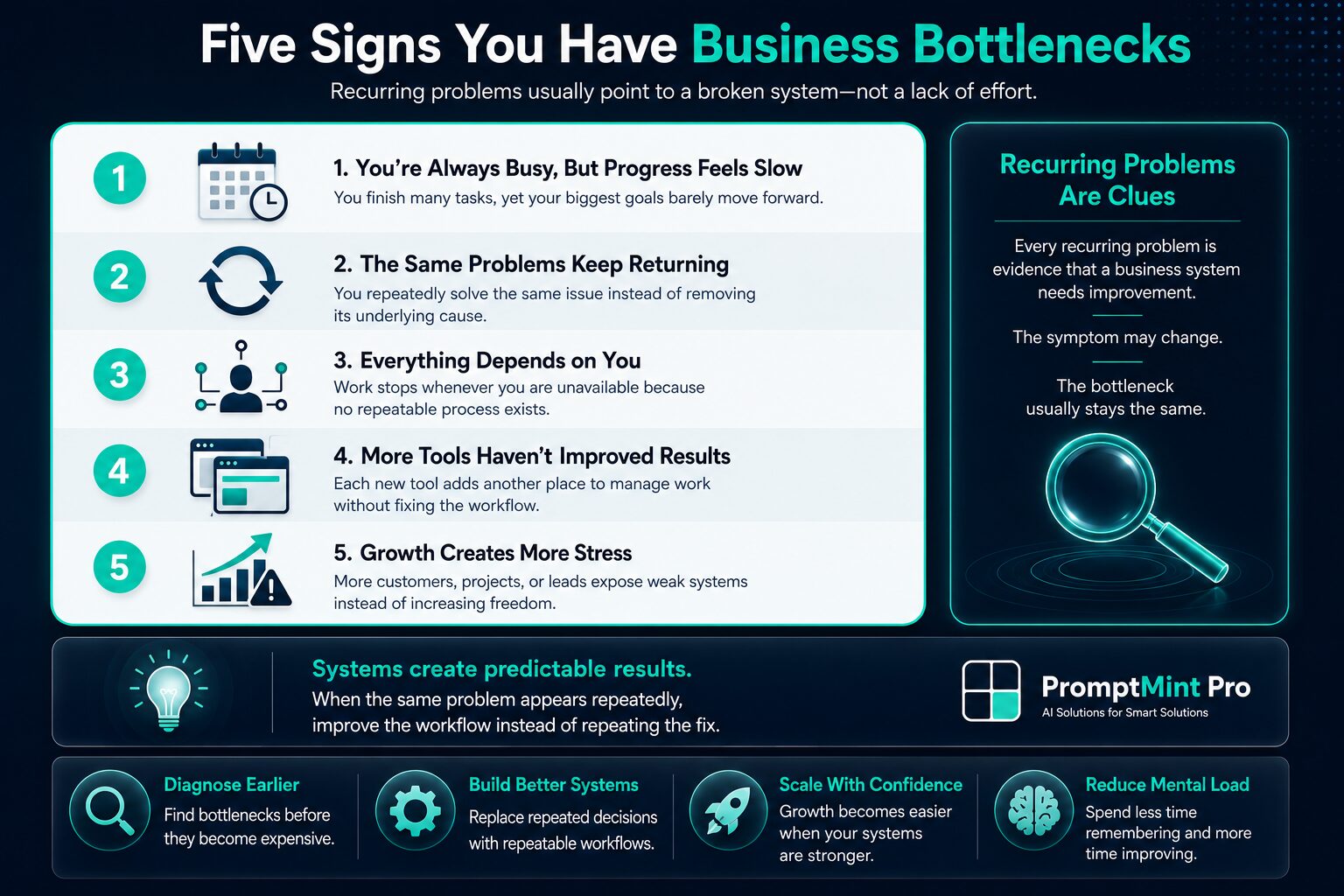
You finish tasks every day, but the most important outcomes do not move forward.
If the same problem returns, the system behind the work needs attention.
Work stops when you are unavailable because no repeatable process exists.
More tools create more places to manage work without fixing the workflow.
The pattern to notice
When a problem appears again and again, do not only ask how to fix it this time. Ask what system keeps producing it.
You do not need a complicated audit to start finding your biggest constraint. A useful diagnosis begins by noticing where the same problems keep repeating.
Use this checklist to assess whether your current challenge is the real problem or just a visible symptom of deeper business bottlenecks.
☐ The same problem keeps coming back.
☐ I repeat the same tasks manually.
☐ Work depends on me remembering every step.
☐ More tools have not solved the issue.
☐ Growth creates more stress.
☐ Few workflows are documented.
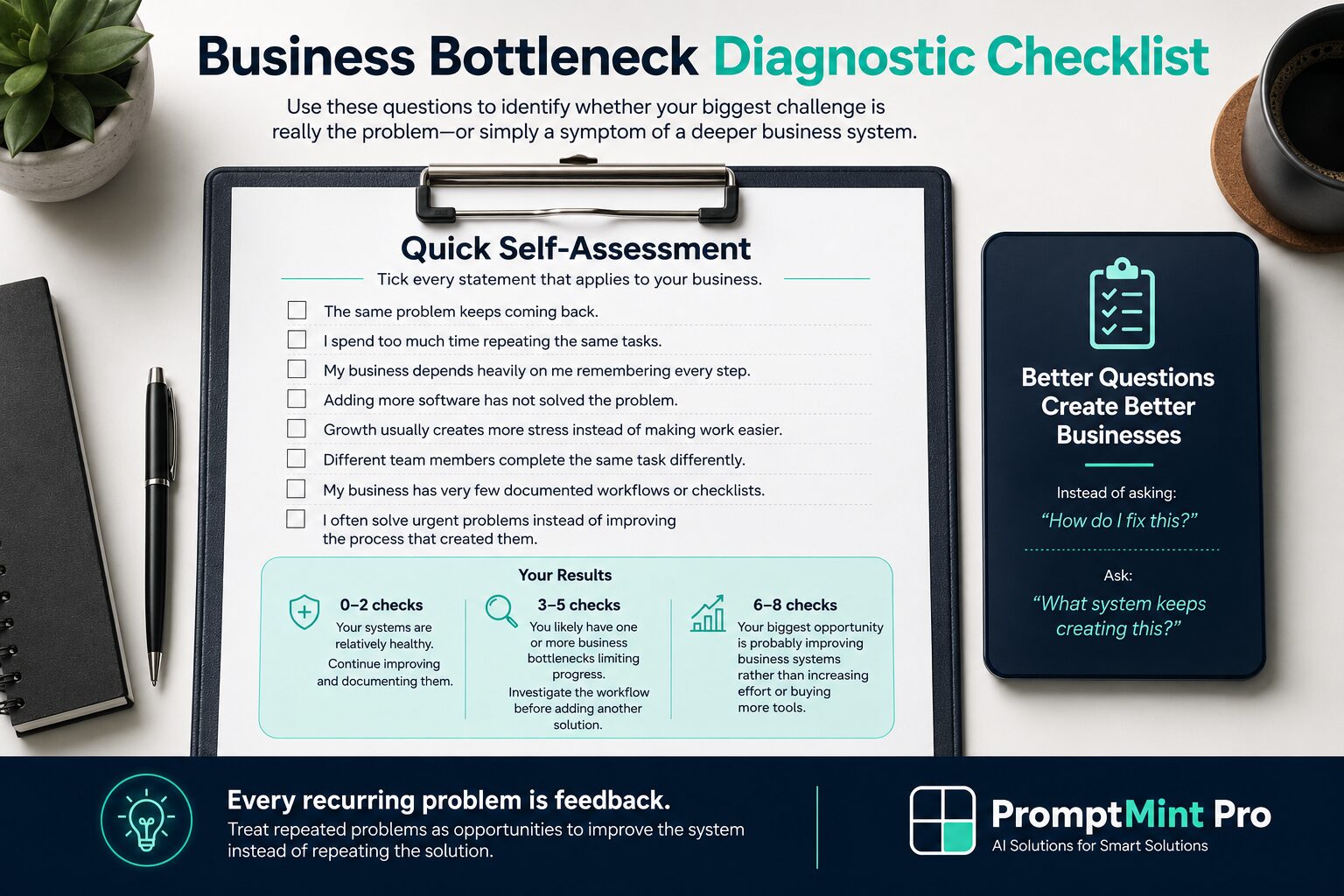
0–2 Checks
Keep documenting what already works and improve the areas that still depend too much on memory.
3–5 Checks
Investigate the workflow before adding another tool, campaign, or person to the business.
6+ Checks
Your biggest opportunity is probably improving repeatable systems, not increasing effort.
Better diagnostic question
Every recurring problem is feedback. Treat repeated issues as opportunities to improve the system instead of repeating the same fix.
The wrong solution usually feels productive at first. That is what makes it risky. It gives you motion without necessarily creating progress.
Before choosing another tool, tactic, or quick fix, return to the core lesson: identify the real business bottleneck before investing more effort into the visible symptom.
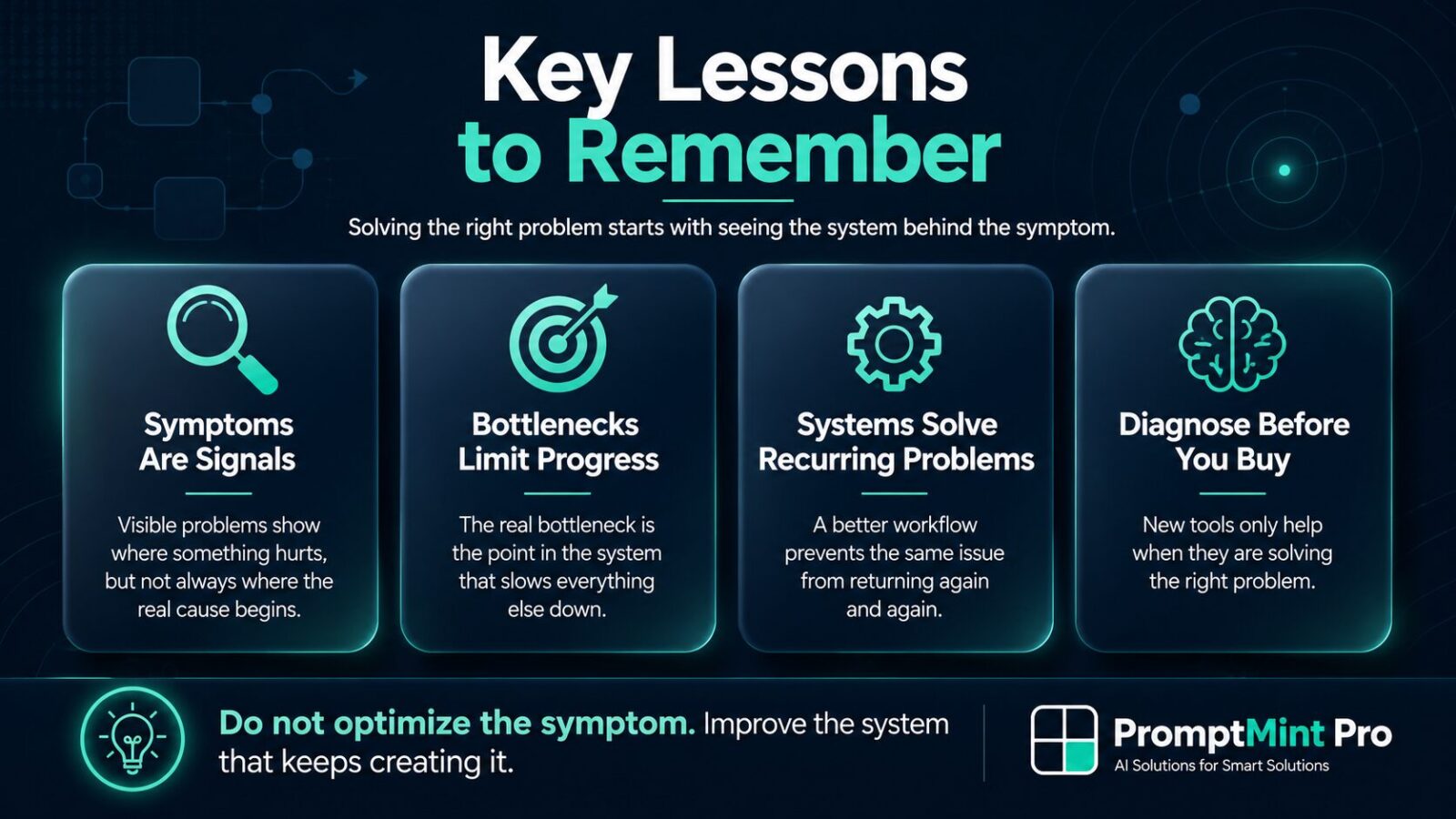
Visible problems show where something hurts, but not always where the real cause begins.
The real bottleneck is the point in the system that slows everything else down.
A better workflow prevents the same issue from returning again and again.
New tools only help when they are solving the right problem.
Remember This